 WikiCatch
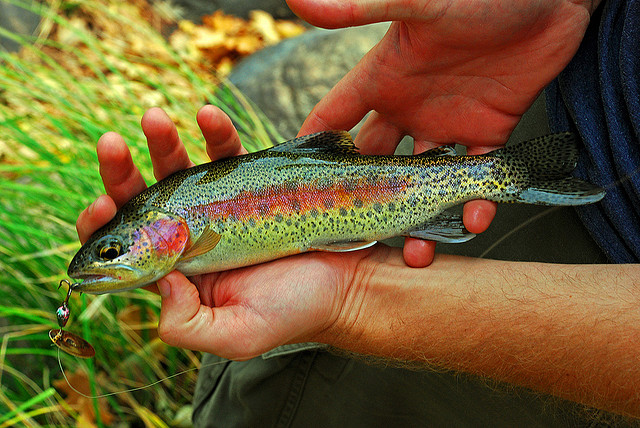
Kern River Rainbow Trout
Oncorhynchus mykiss gilberti
Overview
The Kern River rainbow trout is a localized subspecies of the rainbow trout, a variety of fish in the family Salmonidae. It is found in a short section of the main stem of the Kern River and several tributaries in the southern Sierra Nevada in California. The Kern River rainbow trout is a "Species of Special Concern" in the state of California due to habitat loss and hybridization with other native and non-native trout in their range.
Best Baits & Lures
Live Baits
- Nightcrawlers
Use a small piece on a size 8 hook.
- Red Worms
Effective in slower-moving water.
- Grasshoppers
Great during summer months.
- Mealworms
Easy to keep alive and use.
- Salmon Eggs
Use single eggs or small clusters.
Artificial Lures
- Mepps Aglia #2SpinnerBuy
Silver blade is highly effective.
- Blue Fox Vibrax Foxtail Spinner #2SpinnerBuy
Vibration attracts trout.
- Rapala Original Floater 05CrankbaitBuy
Excellent for twitching and pausing.
- Panther Martin Spinner - Black/Yellow SpotsSpinnerBuy
Deadly in clear water.
- Woolly Bugger (Olive)FlyBuy
Versatile fly for various conditions.
Techniques
Fish near undercut banks and submerged structure where Kern River Rainbow Trout seek refuge; use polarized sunglasses to spot them first.
Where to Find Kern River Rainbow Trout
Frequently Asked Questions
What is the best bait for Kern River Rainbow Trout?+
Popular baits for Kern River Rainbow Trout include Nightcrawlers, Red Worms, Grasshoppers, Mealworms, Salmon Eggs. Tip: Fish near undercut banks and submerged structure where Kern River Rainbow Trout seek refuge; use polarized sunglasses to spot them first.
Where can I catch Kern River Rainbow Trout?+
Kern River Rainbow Trout can be found in many locations worldwide. Top regions include California, United States. WikiCatch lists 1 fishing spots where this species is found.
How big do Kern River Rainbow Trout get?+
Kern River Rainbow Trout (Oncorhynchus mykiss gilberti) can reach up to 120 cm in length and 25 kg in weight. Their IUCN conservation status is NE.
Get WikiCatch on iPhone
325,000+ fishing waters, depth maps, AI fish ID, weather & solunar. Free to browse.