 WikiCatch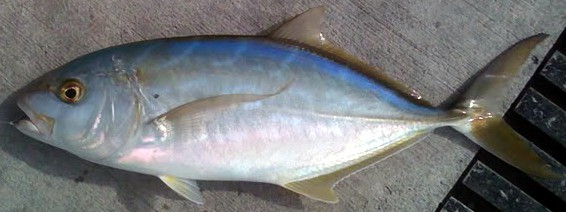
Yellow jack
Caranx bartholomaei
Overview
The yellow jack, also known as coolihoo, is a species of marine fish in the jack family, Carangidae. It is one of only two representatives of its genus present in the Atlantic Ocean, inhabiting waters off the east coast of the Americas from Massachusetts in the north to Brazil in the south, as well as a number of offshore islands. The yellow jack can be distinguished from closely related species by the length of the jaw, as well as counts of the rays in the fins. It is a fairly large fish, growing to a recorded maximum length of 1 metre (39 in), and a weight of at least 14 kilograms (31 lb). Yellow jack inhabit reefs, moving either individually or in schools and are predatory fish which primarily take other small fish. Studies in the Caribbean suggest the species reaches sexual maturity between 23 and 32 centimetres, and spawns in offshore waters from February to October. Yellow jack are of minor economic importance, taken by both hook and net methods, and are considered to be fair table fish. They are often caught by boat anglers, although are overlooked for their larger relatives.
Best Baits & Lures
Live Baits
- Pilchards
Excellent all-around bait, readily eaten.
- Herring
Effective when trolled or drifted.
- Live Shrimp
Irresistible to many fish, including yellow jack.
- Pinfish
Hardy and readily available inshore bait.
- Small Blue Runners
Good for larger yellow jack.
Artificial Lures
- Yo-Zuri Crystal Minnow Deep DiverCrankbaitBuy
Great for trolling deeper waters.
- Rapala X-Rap 10CrankbaitBuy
Erratic action triggers strikes.
- Savage Gear Sand EelSoft PlasticBuy
Effective when jigged vertically.
- Crippled Herring SpoonSpoonBuy
Flashy and attracts attention.
- Shimano Butterfly JigJigBuy
Deadly when worked quickly.
Techniques
When targeting yellow jack, use a fast retrieve with artificial lures to imitate fleeing baitfish and trigger aggressive strikes.
As an Amazon Associate, WikiCatch earns from qualifying purchases.
Where to Find Yellow jack
Frequently Asked Questions
What is the best bait for Yellow jack?+
Popular baits for Yellow jack include Pilchards, Herring, Live Shrimp, Pinfish, Small Blue Runners. Tip: When targeting yellow jack, use a fast retrieve with artificial lures to imitate fleeing baitfish and trigger aggressive strikes.
Where can I catch Yellow jack?+
Yellow jack can be found in many locations worldwide. Top regions include Florida, United States; Puerto Rico, Puerto Rico; Rio de Janeiro, Brazil. WikiCatch lists 36 fishing spots where this species is found.
How big do Yellow jack get?+
Yellow jack (Caranx bartholomaei) can reach up to 100 cm in length and 14 kg in weight. Their IUCN conservation status is LC.
Get WikiCatch on iPhone
360,000+ fishing spots, AI fish ID, weather & solunar — free.
Download on the App Store